
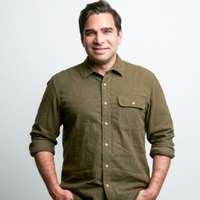
Vikram Bhaskaran
CEO and Co-Founder of Roon
About
I first experienced the health care system as a caregiver – my dad had ALS (a rare neurodegenerative condition). Through this experience I learned that finding community and navigating medical information could be dramatically improved. That’s why I started Roon. We’ve brought together a multidisciplinary team of scientists, doctors, engineers, designers, and storytellers to reimagine the experience of health online. Today, Roon has two sides: for patients, it’s a trusted place to navigate conditions with expert guidance; and for physicians, the Roon Doctor app is a private, physician-only community to share evolving knowledge, connect with peers, and shape the future of medical practice. Before Roon, I spent several years at Pinterest in a variety of key roles (product, marketing, sales, partnerships, creators) and had a front row seat in shaping Pinterest and seeing it go from idea to IPO and beyond. I love building things that have a transformative impact on people.
Work Experience
Jun 2021 - Present (5y 5m)
Building the human network behind modern medicine—bringing physicians together to reimagine how medical knowledge is created, shared, and discovered. Backed by Sequoia, FirstMark, SV Angel, TMV, and founders of health and technology platforms that reach millions.
May 2017 - Nov 2019 (2y 6m)
May 2015 - Apr 2017 (1y 11m)
Jan 2014 - Apr 2015 (1y 3m)
Timeline


Is there an AI bubble? Andrew Ng offers a nuanced perspective that breaks the AI ecosystem into three layers, each with a different investment landscape. - The AI application layer is significantly underinvested. Despite explosive progress in foundational models, the true value lies in building AI-native products and agentic workflows that integrate AI deeply into how businesses operate. This is where the greatest upside—and opportunity—remains. - The AI infrastructure for inference is under rapid expansion, but still struggling to keep up with skyrocketing demand. Teams face supply constraints on processing power to generate tokens, which limits broader adoption and usage growth. - The AI infrastructure for model training is the riskiest area. Massive investment is flowing in, but cheaper and improved algorithms plus open-source competition could lead to overbuilding and financial loss for some providers. In short, while some parts of the AI stack may seem bubbly, the fundamentals of AI applications and inference infrastructure remain strong. The best strategy? Keep building real AI products and workflows. Long-term value will follow. Source:
1
