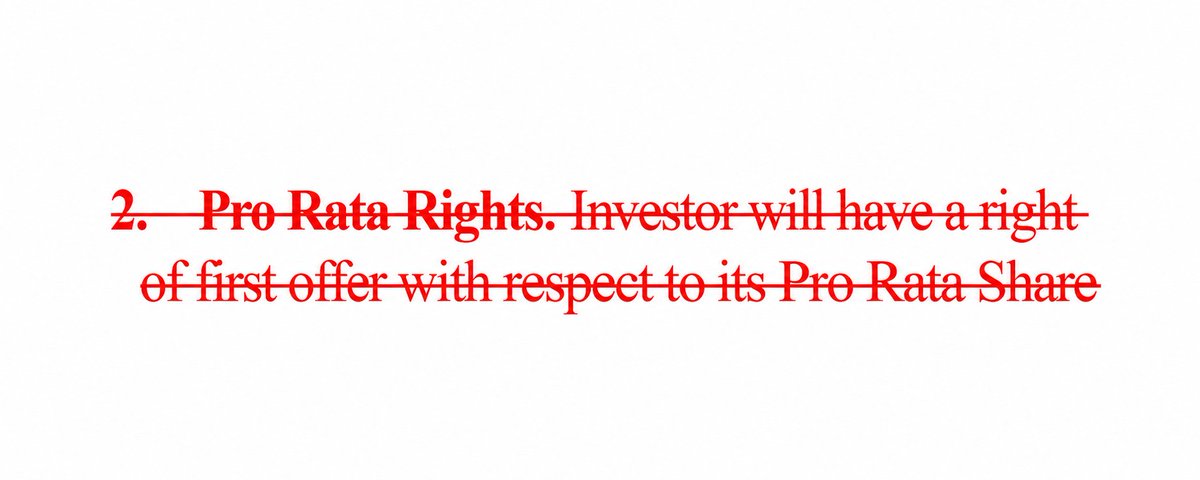
Reading the replies to this is interesting because 99% of them dunk on Day One (which is quite easy to dunk on for quite a few reasons!), but fighting for partial pro-rata when one insider is reinvesting and others otherwise aren’t is actually economically rational (even if it’s reputationally hazardous).
Also a very good case study in “investor base matters,” “terms matter,” etc, though wild to see someone actually sue a startup for not letting them use their pro-rata (cc @yrechtman I thought this was just a bit)
If you, as a major investor, are told that all major investors are waiving as a class, but then a single existing investor doubles down (even if strategic) at the expense of more dilution to you, and you have a right to match their pro-rata via spring back, then yes of course you’ll want to use it even if it pisses everyone else off.
If you don’t, then “you” eat additional dilution you didn’t sign up for (we all waived our pro-rata but someone gets to invest? I want to as well then!)
That additional dilution in turn impacts your potential returns. Everyone is a team player until economics are involved. On the flipside, the founder, employees, and other investors all eat that additional dilution if you exercise your right. So they hate you. Which is also economically rational hatred, bc, you know, dilution.
Again, Day One is easy to hate both because of the easy PR layup + suing your nuclear reactor PortCo for not letting you invest more when Sequoia comes in is literally an episode of Silicon Valley, but also I get why they want to use the spring back.
Will be interesting to watch! Particularly if Day One wins, invests more money in a company that hates them out of spite, and then Valar is worth like $100b+ and they make a “hate bag” off their investment.
And then Sequoia mogs everyone because, of course, Sequoia.