
LoginSign Up
Sign Up

New to SuperMe?

Sign up free to work on your questions with people who've been there, like Pranav.

Sign up for freeLog in

Pranav Piyush

CEO @ Paramark | Marketing measurement that CFOs & CMOs trust

524K insights
Visible to Pranav
Pranav won't be able to see or reply to your conversation in incognito mode

About

The martech industry is broken, and I’m devoting the next 15 years of my life to fix it. After a decade leading growth and marketing teams at places like Dropbox, Pilot, Magento and BILL, I realized there was no measurement tool on the market that was statistically valid, simple and holistic. So I went and talked to every CMO and VP of marketing in my network. Their number one complaint? Attribution. And this is why we built Paramark. Because I believe that measuring your marketing efforts is not that hard. Through the power of MMM, experimentation and data science, we’ve created the holy grail of measurement tools. So marketers like you can confidently understand the impact of your marketing investments – and communicate them to your CFO and CEO. Learn our method at Paramark.com.

San Francisco, California

Work Experience

Co-Founder & CEO at

Mar 2023 - Present (3y 8m)

Paramark is the marketing measurement tool that CMOs and CFOs trust: statistically valid, holistic and simple to use. Invest in marketing with confidence and predictability. Learn our method at Paramark.com.

VP, Marketing at

Jun 2020 - Feb 2023 (2y 8m)

Product and Customer marketing. VP Marketing for Invoice2go (acquired by BILL in Sep 2021).

Head of Growth at

May 2019 - Jun 2020 (1y 1m)

Launched new products that grew revenue.

Head of Growth at

Oct 2016 - May 2019 (2y 7m)

Launched new products. Grew marketing's impact.

Timeline

Pranav Piyush

Eric Olsen

@ericolsenCMO

If a human tells their AI tool to complete the CAPTCHA, did a human complete the CAPTCHA?

View on 𝕏
Pranav Piyush

Gaetano DiNardi

@gaetano_nyc

I don't know of ONE B2B company that is succeeding with ChatGPT ads. Every single experiment has been the same outcome. Dogshit leads, terrible ROI and thousands of dollars torched. No data transparency, no insight into why campaigns are failing, etc.

View on 𝕏
Pranav Piyush

Austin Rief ☕️

@austin_rief

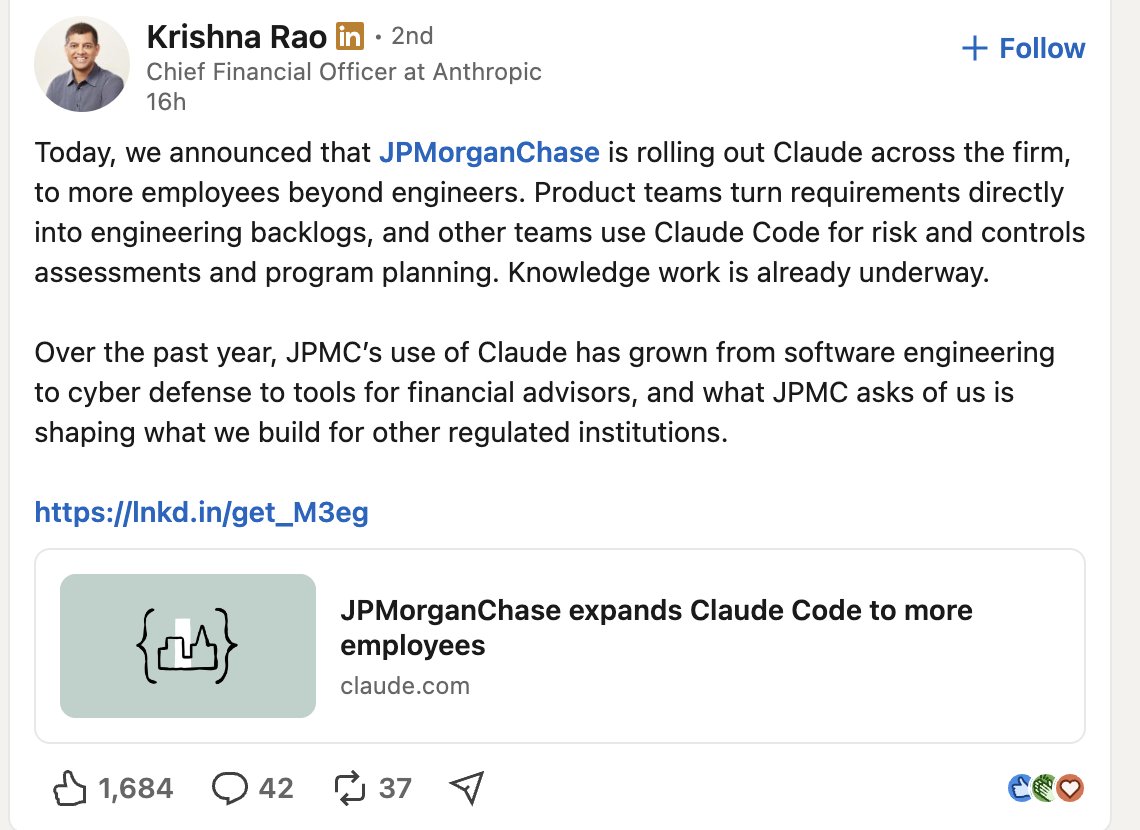
It's kind of crazy that its November 2026 and JP Morgan employees are just now getting access to Claude.

It's kind of crazy that its November 2026 and JP Morgan employees are just now getting access to Claude.
View on 𝕏
Pranav Piyush

Hector

@hectorserrranoo

excited to announce i'm joining @whop i started my first business on whop 3 years ago now i get to help give everyone that same freedom

excited to announce i'm joining @whop 

i started my first business on whop 3 years ago now i get to help give everyone that same freedom
View on 𝕏
Pranav Piyush

Pranav Piyush

@pranavpiyush

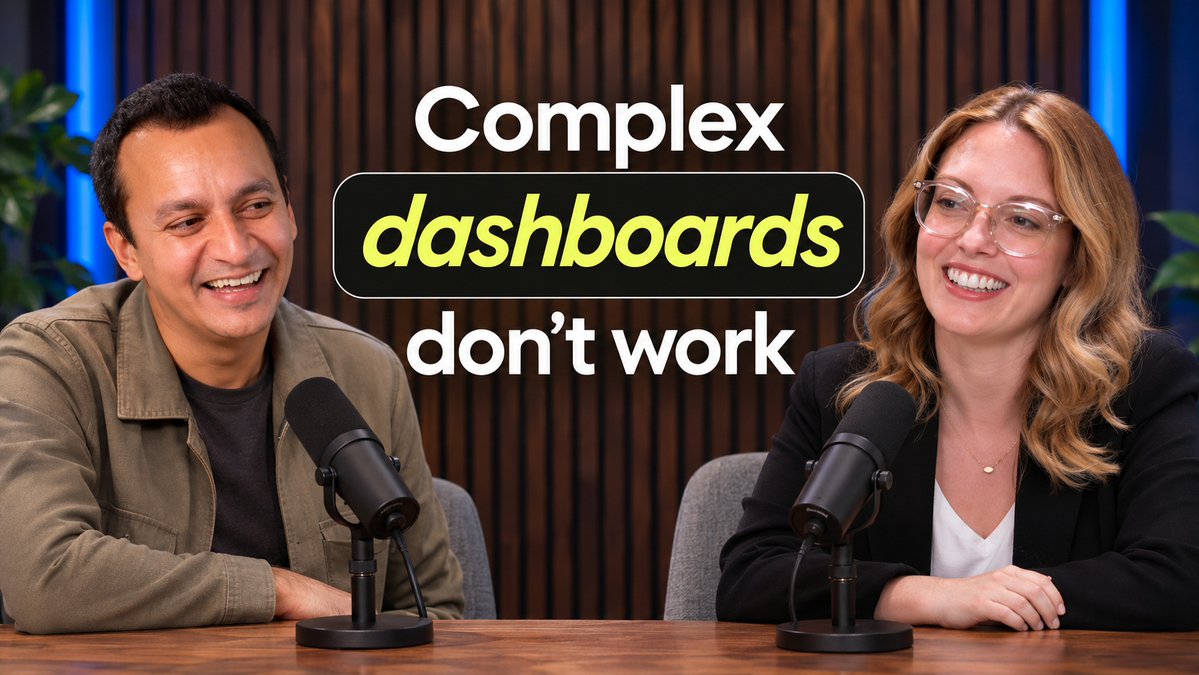
"Just tell me the number." Every marketer has heard that from finance. I asked Jessica Duncan, who leads data science and analytics at AG1, how she answers it. Her answer: "There is no one number. And that's okay." Here are the ten things I took away from the latest Brandformance podcast with her: 1️⃣ Get the message across fast. Executives glance at a dashboard while scrolling. If they don't get it right away, the dashboard didn't do its job. Same in marketing: there's a time to explain the value prop and a time to stop the scroll, and you have to know which is which. 2️⃣ Match the tool to the question. MMM is great for splitting budget across channels. It's a bad tool for deciding which of six new creators gets an extra $15k. For that, a post-purchase survey, imperfect as it is, probably gives the best signal on creators who don't drive many clicks. 3️⃣ Pick the tool before you see the output. Ask "which tool answers this question?" before you look at any results. Asking "which tool gives me permission to spend more here?" afterward is cherry-picking. 4️⃣ Don't blend everything into one number. She calls that sausage making, a phrase she borrowed from a former colleague. Triangulation is overrated. 5️⃣ "Tell me the number" really means "help me feel confident in a decision." You can get there without throwing out every other number. 6️⃣ Show finance the impact before you change a definition. Her team ran hypothetical forecasts and spun up dev tables so finance could see what a new "new customer" definition would do. Real data settled fears that hypotheticals couldn't. 7️⃣ Governed metrics keep analysts honest. AG1 built a semantic layer in dbt on Snowflake. CAC, ROAS and AOV calculate the same way every time, including when someone asks Claude. The MMM and lift results live in it too. 8️⃣ Retail breaks LTV. DTC subscriptions let them track repeat order rates. At retail they can't tell a repeat buyer from a new one, or from a DTC customer who forgot their AG1 on vacation. So they model one simple, trackable KPI across everything and layer LTV on after. 9️⃣ Test the hypothesis. I admitted to her that I think I should invest more in social than search (for Paramark). Her answer: run a test. They lean on platform lift studies because geo holdouts cost more, though geo gets more useful once retail is in the mix. 🔟 Brand is still the hard conversation with finance. "Show me the return" is a fair ask. But if top of funnel dries up, bottom of funnel follows. One caveat: Jessica still uses MMM, MTA, lift tests and surveys. She isn't against any of them. Each one just gets a job. Which number does your CFO keep asking you for? The full episode is one of my favorites. Link in the comments if you work on measurement.

"Just tell me the number." Every marketer has heard that from finance. I asked Jessica Duncan, who leads data science and analytics at AG1, how she answers it.

Her answer: "There is no one number. And that's okay."

Here are the ten things I took away from the latest Brandformance podcast with her:

1️⃣  Get the message across fast. 
Executives glance at a dashboard while scrolling. If they don't get it right away, the dashboard didn't do its job. Same in marketing: there's a time to explain the value prop and a time to stop the scroll, and you have to know which is which.

2️⃣ Match the tool to the question. 
MMM is great for splitting budget across channels. It's a bad tool for deciding which of six new creators gets an extra $15k. For that, a post-purchase survey, imperfect as it is, probably gives the best signal on creators who don't drive many clicks.

3️⃣ Pick the tool before you see the output. 
Ask "which tool answers this question?" before you look at any results. Asking "which tool gives me permission to spend more here?" afterward is cherry-picking.

4️⃣ Don't blend everything into one number. 
She calls that sausage making, a phrase she borrowed from a former colleague. Triangulation is overrated.

5️⃣ "Tell me the number" really means "help me feel confident in a decision." 
You can get there without throwing out every other number.

6️⃣ Show finance the impact before you change a definition. 
Her team ran hypothetical forecasts and spun up dev tables so finance could see what a new "new customer" definition would do. Real data settled fears that hypotheticals couldn't.

7️⃣ Governed metrics keep analysts honest. 
AG1 built a semantic layer in dbt on Snowflake. CAC, ROAS and AOV calculate the same way every time, including when someone asks Claude. The MMM and lift results live in it too.

8️⃣ Retail breaks LTV. 
DTC subscriptions let them track repeat order rates. At retail they can't tell a repeat buyer from a new one, or from a DTC customer who forgot their AG1 on vacation. So they model one simple, trackable KPI across everything and layer LTV on after.

9️⃣ Test the hypothesis. 
I admitted to her that I think I should invest more in social than search (for Paramark). Her answer: run a test. They lean on platform lift studies because geo holdouts cost more, though geo gets more useful once retail is in the mix.

🔟 Brand is still the hard conversation with finance. 
"Show me the return" is a fair ask. But if top of funnel dries up, bottom of funnel follows. 

One caveat: Jessica still uses MMM, MTA, lift tests and surveys. She isn't against any of them. Each one just gets a job.

Which number does your CFO keep asking you for?

The full episode is one of my favorites. Link in the comments if you work on measurement.
View on 𝕏