LoginSign Up

Colin Gardiner

Marketplace Geek and Solo-GP @ Yonder. Investing in pre-seed/seed marketplaces. Former Outdoorsy, Tripping.com, Ancestry.com, Justanswer and Federal Reserve.
366K insights
Visible to Colin
Colin won't be able to see or reply to your conversation in incognito mode
Ask about me
Learn from my insights
Jam on a problem
Former economics/statistical researcher that now loves building sticky consumer facing products via iterative data-driven methods. Built products for both large corporations and seed level startups, always with a primary...
Austin, Texas
Colin Gardiner

Unknown

@twitter.com

View on 𝕏
Colin Gardiner

Pawel Kaczmarek

@Super_PK_

Chart crime 🀣 But clicks/impressions on its own axis. 3x clicks is good - but can’t see it.

View on 𝕏
Colin Gardiner
View on 𝕏
Colin Gardiner

Dan Hockenmaier

@danhockenmaier

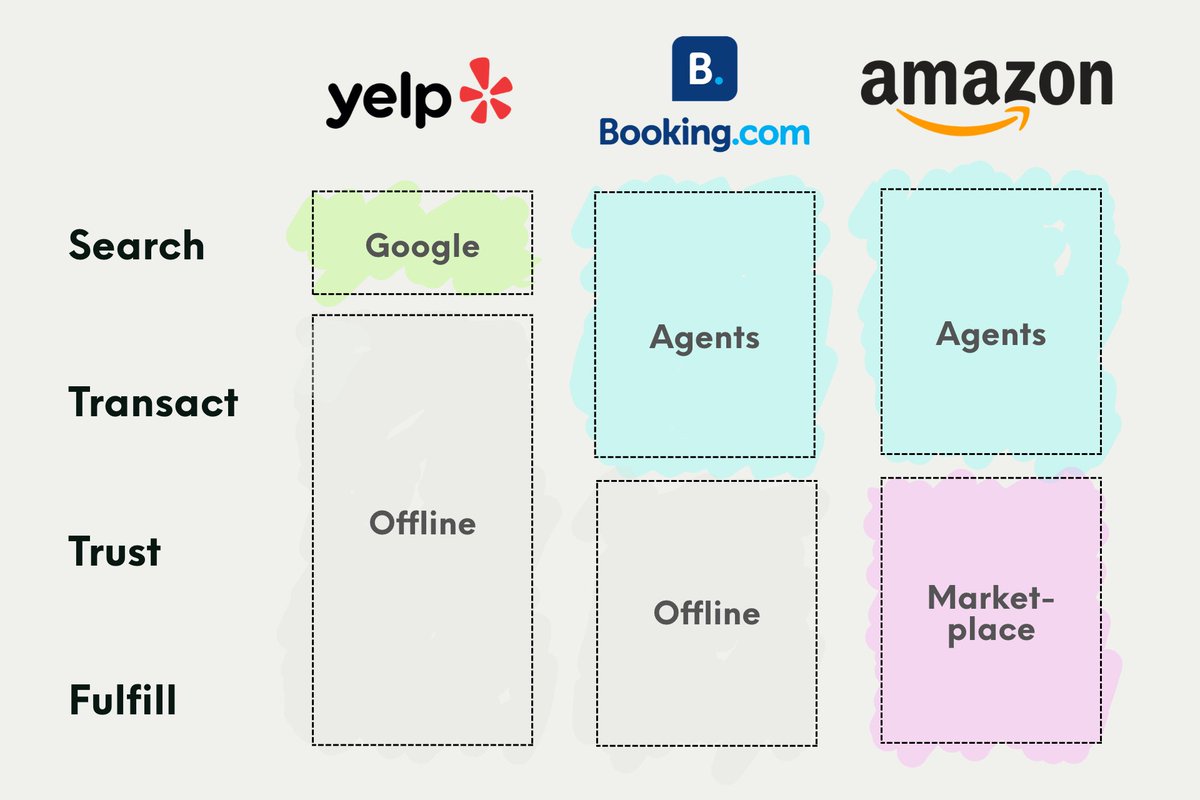
A mental model for reasoning about how agents will impact the marketplace business model Marketplaces do four jobs for customers: 1. They help them search 2. They allow them to transact 3. The commoditize trust 4. They handle fulfillment Google can only do search. That meant they could really only fully eat the profit pools of industries that don't need steps 2-4 because they transact offline. e.g. restaurant reservations and local services But agents are not only better at search, they can also transact. That means they are going to eat the profit pool of industries that don't require steps 3-4. e.g. in hotels, the big brands are the trust layer not the marketplace, and customers travel to them so there is no fulfillment But most industries are not like this. They still need marketplaces to aggregate fragmented supply, backstop trust, and hand the messy last mile That is why Amazon, DoorDash, Uber, and most other big marketplaces will be much more resilient to agents Agents are probably going to work, but they are going to need to strike deals with marketplaces that mostly preserve their economics. Because in the end they have the most leverage: the product needs to actually get to your house.


A mental model for reasoning about how agents will impact the marketplace business model

Marketplaces do four jobs for customers:
1. They help them search 
2. They allow them to transact
3. The commoditize trust 
4. They handle fulfillment

Google can only do search. That meant they could really only fully eat the profit pools of industries that don't need steps 2-4 because they transact offline. e.g. restaurant reservations and local services

But agents are not only better at search, they can also transact. That means they are going to eat the profit pool of industries that don't require steps 3-4.
e.g. in hotels, the big brands are the trust layer not the marketplace, and customers travel to them so there is no fulfillment

But most industries are not like this. They still need marketplaces to aggregate fragmented supply, backstop trust, and hand the messy last mile

That is why Amazon, DoorDash, Uber, and most other big marketplaces will be much more resilient to agents

Agents are probably going to work, but they are going to need to strike deals with marketplaces that mostly preserve their economics. Because in the end they have the most leverage: the product needs to actually get to your house.
View on 𝕏
Colin Gardiner
View on 𝕏
Get the App
New to SuperMe?

Sign up free to work on your questions with people who've been there, like Colin.Download SuperMe for the best experience